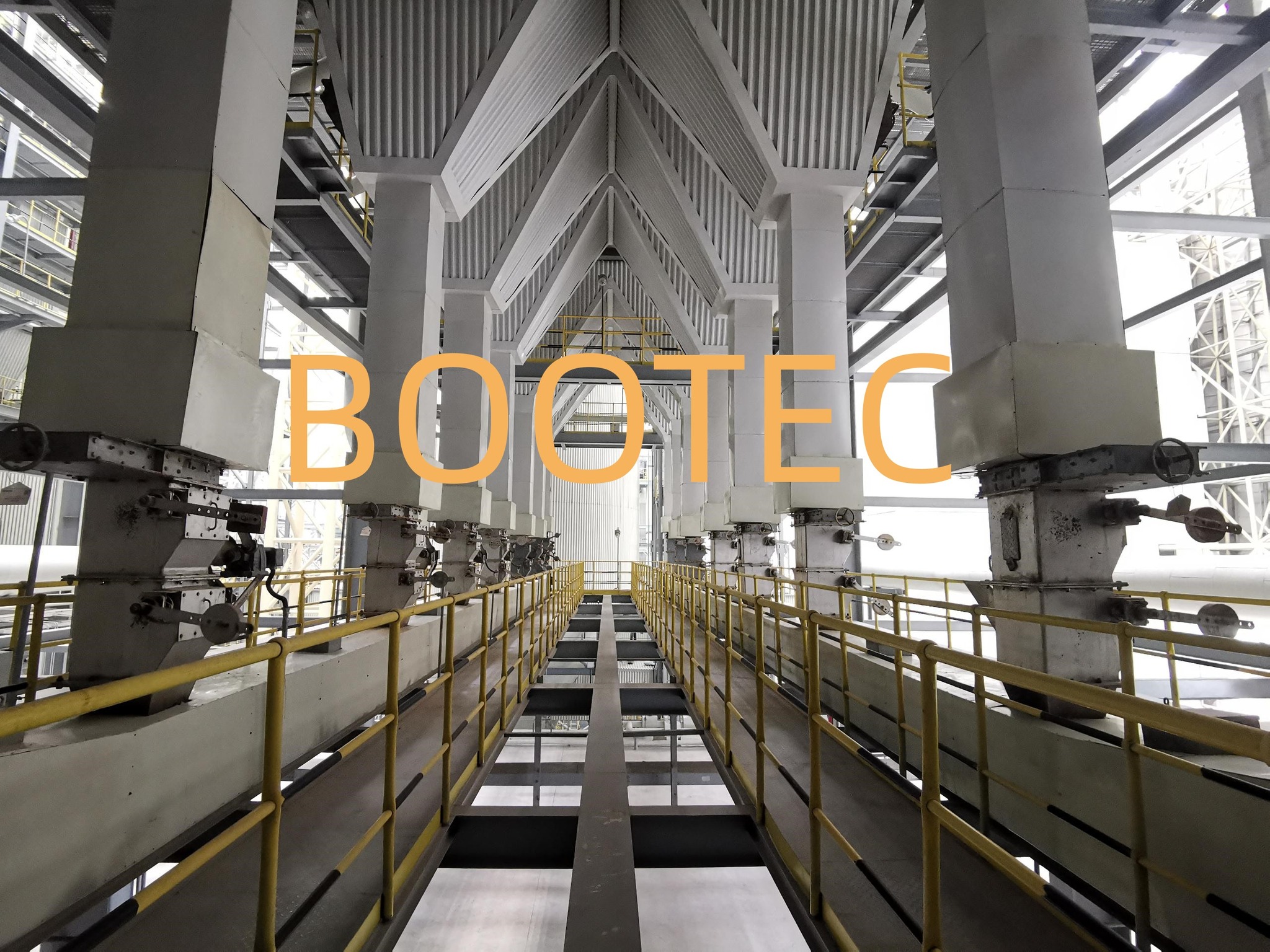

HOT TRANSPORT CONVEYOR (HTC) SYSTEM
Hot Transport Conveyor
The Hot Transport Conveyor (HTC) System is a specialized ash handling system designed for the efficient transportation of high-temperature ash or slag directly from the boiler or furnace to designated collection points, such as silos or processing areas. It is a dry ash handling solution, eliminating the need for water-based quenching systems and addressing environmental concerns such as water usage and pollution.
Key Features of the HTC System:
- High-Temperature Operation:
- The HTC system is capable of handling ash at extremely high temperatures, typically ranging from 300°C to 800°C, depending on the boiler’s operating conditions.
- Robust Construction:
- Built with heat-resistant materials, the HTC system ensures long-term reliability and durability, even in harsh environments.
- Dust Control:
- The conveyor is designed to minimize dust emissions through enclosed structures and integrated sealing systems, ensuring compliance with environmental regulations.
- Air Cooling Mechanism:
- Some HTC systems use ambient or forced air for cooling the ash as it is transported, ensuring safe handling and reducing the need for additional cooling systems.
- Continuous Operation:
- Provides uninterrupted ash transport, allowing for higher operational efficiency and minimal downtime for maintenance.
- Energy Efficiency:
- The system optimizes energy usage by utilizing mechanical components such as chain conveyors or screw conveyors that require minimal power.
Working Principle:
- Ash Discharge:
- High-temperature ash or slag is discharged from the boiler’s ash hopper into the HTC system.
- Ash Transport:
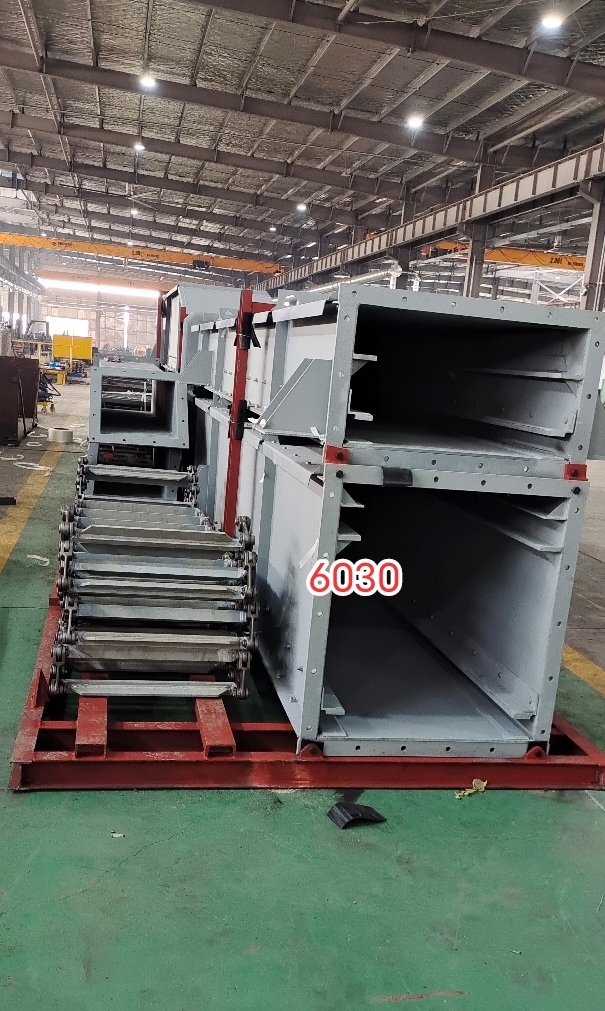
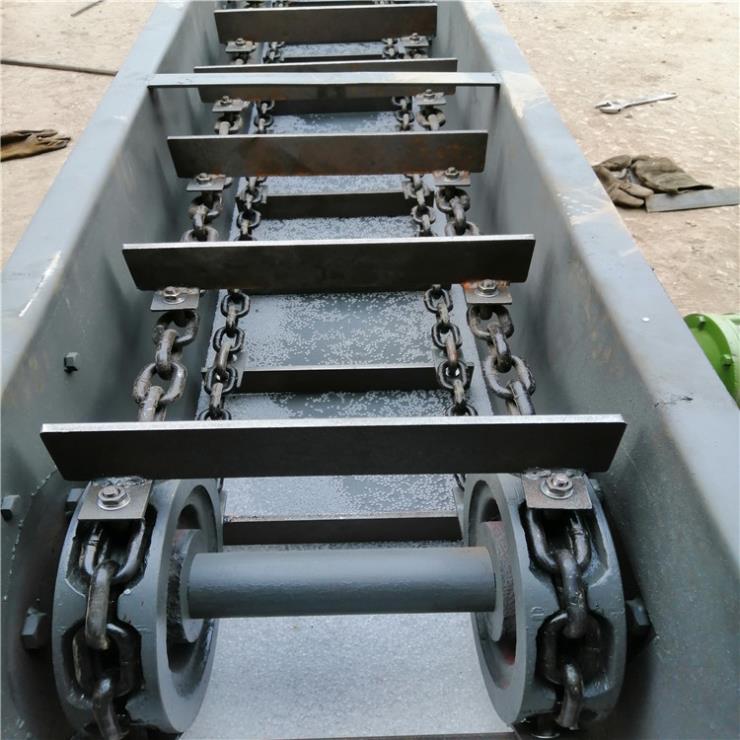
- The ash is conveyed via a chain conveyor, belt conveyor, or screw conveyor, depending on the design. The conveyor is enclosed to prevent heat and dust from escaping.
- Cooling:
- As the ash moves along the conveyor, it undergoes air cooling through ambient or forced air mechanisms, reducing its temperature before further processing.
- Ash Collection:
- The ash is delivered to the designated collection point, such as a silo, bin, or transportation vehicle, for disposal or recycling.
Advantages of the HTC System:
- Water-Free Operation:
- Unlike submerged or wet ash handling systems, the HTC eliminates water usage, conserving resources and reducing wastewater treatment requirements.
- Environmental Compliance:
- Dust-free operation and the absence of water pollution make it easier to meet environmental regulations.
- Lower Maintenance Costs:
- Without water and corrosion-related issues, the system requires less frequent maintenance and repairs.
- Reuse Potential:
- Dry ash is more suitable for recycling and reuse in applications such as cement production or road construction.
- Space Efficiency:
- Compact and modular design allows for easy integration into existing plant layouts.
Applications:
- Waste-to-Energy Plants: Transporting high-temperature bottom ash.
- Coal-Fired Power Plants: Handling boiler bottom ash or clinker.
- Biomass Power Plants: Transporting ash from wood chips or other biomass fuel sources.
- Industrial Furnaces: Handling slag and residues from industrial processes.
Why Use HTC Systems?
Hot Transport Conveyor systems are an innovative solution for modern power plants aiming to enhance efficiency, reduce environmental impact, and improve operational reliability. They are particularly beneficial for plants that require continuous ash removal and wish to minimize water usage while handling high-temperature ash safely.
Would you like more details about system customization, installation, or integration? Let me know!
submerged scraper conveyor in a coal fired power plant
Ash extracting conveyors of different systems belong to the product range and delivery program. These products are for both the extraction of combustion chamber ash and the transport of all other ash residues of coal-fired steam generators and waste incineration plants. To ensure high availability of the plants conveying components have been developed, which guarantee reliable operation and are economically justifiable with regard to power requirements, operation, maintenance, repair and investment costs.
submerged scraper conveyor in a coal fired power plant
Advantage:
1. Solid structure. It can withstand the impact, collision, smashing, pressure and other external forces of coal, gangue or other materials.
2. It can meet the needs of uneven, bending and moving of the floor of the coal mining face, and can bear the bending in the vertical or horizontal direction.
3. Low fuselage for easy installation.
4. It can also be used as the track for shearer operation.
5. It can run in reverse to facilitate the handling of bottom chain accidents.
6. It can be used as the fulcrum of the front section of the hydraulic support.
7. The utility model has the advantages of simple structure and can be fed or unloaded at any point on the conveying length.
8. The enclosure is sealed, which can prevent dust flying and polluting the environment when transporting materials.
9. When there is no casing at the tail and the scraper is inserted into the pile, it can be taken and transported by itself.
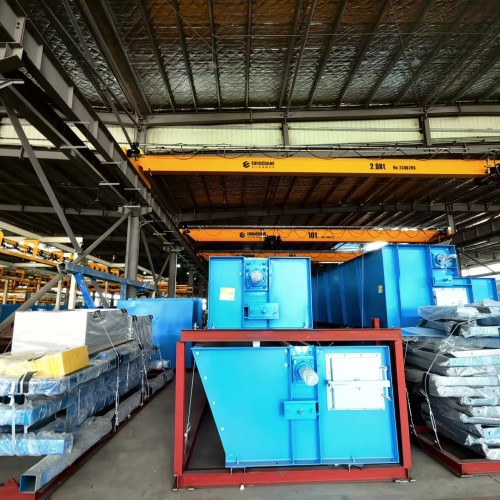
SELECTION & TECHNICAL QUESTIONS
Q1: How do I select the right conveyor model? What information should I provide?
> To recommend the most suitable solution, please provide the following details:
> 1. Material type: What material are you conveying? (e.g., fly ash, wood chips, biomass pellets, bottom ash, etc.)
> 2. Material properties: Particle size, temperature, moisture content, abrasiveness
> 3. Capacity requirement: How many tons per hour (t/h) do you need?
> 4. Installation conditions: Conveying distance, incline angle, space limitations
> 5. Application industry: Which industry is this for? (e.g., waste-to-energy plant, biomass power plant, cement plant)
> You can also email us or contact us via WhatsApp. Our engineers will get back to you within 24 hours.
Q2: What is the difference between screw conveyors and chain conveyors? Which one should I choose?
> Both types have different applications:
> – Screw Conveyors: Best for powdery and small-grain materials (e.g., fly ash, cement powder). Good sealing performance, simple structure, low maintenance cost.
> – Chain Scraper Conveyors: Best for bulky, highly abrasive materials (e.g., bottom ash, municipal solid waste, biomass fragments). Supports multiple inlet and outlet points.
> – Bucket Elevators: Ideal for vertical or steep-incline material lifting.
> If you are not sure, tell us your material and working conditions, and our engineers will help you choose.
Q3: Can your equipment handle high-temperature materials? What is the maximum temperature?
> We can customize equipment according to material temperature:
> – Standard type: 0~80°C, carbon steel
> – Medium temperature type: 80~200°C, thickened wear-resistant liner
> – High temperature type: 200~400°C, special heat-resistant steel, optional cooling jacket
> Please tell us your material temperature, and we will recommend the most suitable material solution.
Q4: Are there any limits on conveying distance and lifting height?
> Standard design range:
> – Screw conveyor: Single section up to 70 meters; multiple sections can be connected for longer distances
> – Chain conveyor: Single machine up to 60 meters
> – Bucket elevator: Lifting height up to 50 meters
> We can also customize for extra-long distances or special angles. Contact us for detailed solutions.
Q5: Do you provide explosion-proof design?
> Yes. For explosive and flammable conditions such as pulverized coal and biomass dust, we offer:
> – Explosion-proof motors (Ex d IIB T4 standard)
> – Reserved openings for explosion vents / rupture discs
> – Fully sealed structure to prevent dust leakage
> Please specify your explosion-proof rating requirements.
CUSTOMIZATION & MANUFACTURING
Q6: Do you support customization? What is the lead time?
> Over 90% of our equipment is customized according to customer working conditions. Standard models take about 90–120days. Special customizations take 120–180 days, depending on configuration complexity.
Q7: What material options do you offer?
> Common materials include:
> – Carbon steel (Q235B): Standard working conditions
> – Wear-resistant steel (NM400/NM500): Highly abrasive materials
> – Stainless steel 304/316L: Food, chemical, corrosion-resistant requirements
> – Bi-metal wear-resistant composite plate: Extreme abrasion conditions
> We will recommend the most cost-effective material solution based on your material properties.
Q8: What certifications do you have?
> We hold the following certifications:
> – ISO 9001:2015 Quality Management System
> – ISO 14001 Environmental Management System
> – ISO 45001 Occupational Health & Safety Management
> – CE Certification (EN 1090 Steel Structure)
> If you need scanned copies of specific certificates, please contact us.
DELIVERY & LOGISTICS
Q9: Which countries do you export to? Do you have export experience?
> Our equipment has been exported to more than 20 countries worldwide, including:
> – Europe: Germany, France, Poland, Turkey, etc.
> – Southeast Asia: Singapore, Thailand, Indonesia, Vietnam, etc.
> – Middle East: Saudi Arabia, UAE, etc.
> – South America**: Brazil, Chile, etc.
> We are familiar with the full export process: packaging, customs declaration, and ocean freight. We can provide FOB, CIF, and other trade terms.
Q10: What is your packaging method? Is it suitable for long-distance ocean shipping?
> Export-standard packaging:
> – Large items / complete machines**: Rust prevention + waterproof film + fumigated solid wood pallet
> – Precision components: Wooden case with shock-absorbing filling
> – Random accessories: Categorized packing with detailed packing list
> All wooden packaging meets IPPC fumigation standards for direct customs clearance.
Q11: What is your minimum order quantity?
> We do not have a strict minimum order quantity. Single-unit orders are welcome. Bulk orders can enjoy more favorable pricing.
INSTALLATION & AFTER-SALES
Q12: Do you provide installation guidance? Do engineers need to come to site?
> We offer two service options:
> 1. Remote guidance: Detailed installation drawings and operation manuals, video guidance for installation (free of charge)
> 2. On-site service: Dispatch engineers to site for installation and commissioning (travel costs are additional)
> Most customers choose remote guidance. Our equipment is designed as a modular structure for easy installation.
Q13: What is the warranty period? What are the wearing parts?
> Standard warranty period is 12 months (from the date of arrival at port).
> Wearing parts list:
> – Chain / screw flights: Approximately 1–3 years, depending on material abrasiveness
> – Liners: Approximately 2–4 years
> – Bearings: Approximately 2–3 years
> We recommend ordering a wearing-parts spare kit together with your first order.
Q14: How do you solve problems during operation?
> We provide 7×24 technical support:>
> – Response within 24 hours for technical issues
> – Remote video troubleshooting guidance
> – Engineer on-site service when necessary
> – Common spare parts in stock for fast delivery
QUOTATION & COOPERATION
**Q15: How can I get a quote? How long does it take?
> Quotation process:
> 1. You provide material parameters, capacity, installation conditions, and other requirements
> 2. Our engineers evaluate and select the appropriate model
> 3. Formal quotation and technical proposal provided within 7 working days
> You can contact us via email, or the online inquiry form.
Q16: What are your payment terms?
> Standard payment terms:
> – 30% advance payment: After contract signing, to start production
> – 70% balance: Before shipment, or against copy of Bill of Lading
For long-term cooperative customers, more flexible payment terms can be negotiated.
Follow these 3 steps to find your ideal conveyor solution
Step 1: Identify Your Material Type
Different materials require different conveyor designs. Tell us what you are conveying:
| Material Category | Examples | Recommended Conveyor Type |
| Powder / Fine Granules | Fly ash, cement powder, lime powder | Screw Conveyor |
| Small Granules / Pellets | Biomass pellets, plastic granules, grain | Screw Conveyor / Belt Conveyor |
| Fragments / Chips | Wood chips, bark, agricultural residues | Chain Scraper Conveyor |
| Bulky / Abrasive | Bottom ash, slag, MSW, clinker | Chain En-Masse Conveyor |
| Vertical Lift | Any bulk material needs vertical transport | Bucket Elevator |
Step 2: Define Your Working Conditions
Please prepare the following parameters before contacting us:
| Parameter | Why It Matters | Example |
| Capacity (t/h) | Determines conveyor size and power | 10 t/h, 50 t/h, 100 t/h |
| Conveying Distance (m) | Determines machine length | 15m horizontal, 30m incline |
| Incline Angle (°) | Affects capacity and design | 0° horizontal, 30° incline |
| Material Temperature (°C) | Determines material grade | Ambient, 150°C, 300°C |
| Moisture Content (%) | Affects discharge design | Dry, damp, wet (needs dewatering) |
| Abrasiveness | Determines liner thickness | Low, medium, high |
| Application Industry | Determines certification needs | Power plant, cement, mining, recycling |
Step 3: Choose Configuration Options
Based on your answers above, our engineers will recommend:
Material grade — carbon steel / wear-resistant steel / stainless steel
Sealing type — open trough / fully enclosed / gas-tight
Drive system — motor power, gearbox brand, speed range
Auxiliary options — explosion-proof motor, cooling jacket, cleaning device, level sensors
Not Sure Where to Start?
Send us your basic requirements, and our engineers will design a customized solution for you — completely free.
Email: bootec@bootecgroup.com Response time: Within 24 hours
[REQUEST A FREE QUOTATION →]