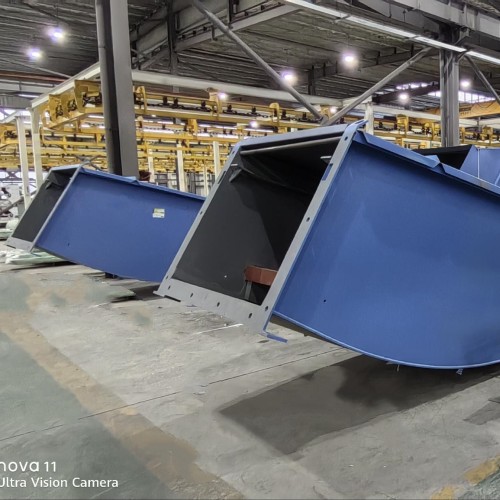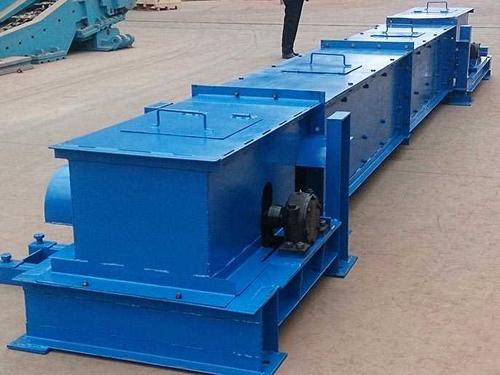

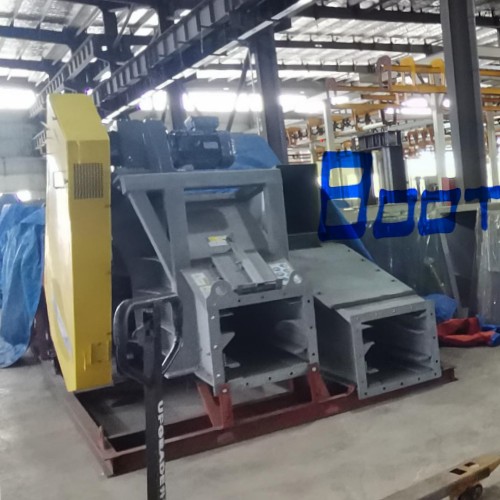
Conveying solutions for Waste to Energy Power Plant Project
Conveying Solutions for Energy-from-Waste (EfW) Plants
Energy-from-Waste (EfW) plants are designed to convert municipal solid waste (MSW) and other forms of waste into energy through combustion or other waste-to-energy technologies. These plants typically generate bottom ash, fly ash, and other byproducts that must be efficiently and safely conveyed for further processing or disposal.
Effective conveying solutions are essential in ensuring smooth operation, reducing downtime, meeting environmental regulations, and handling hazardous waste materials. The right conveyors must be chosen based on the type of waste, the type of energy conversion process (e.g., incineration), and the specific needs of the facility.
Here’s an overview of the conveying systems commonly used in EfW plants, along with their applications:
1. Bottom Ash Conveyors
Bottom ash is the heavy, coarse residue that remains after the combustion process in EfW plants. Efficient bottom ash handling is vital for maintaining operational efficiency, preventing blockages, and ensuring safe disposal or reuse.
- Submerged Scraper Conveyors (SSC):
- Application: Commonly used to transport bottom ash in EfW plants. The ash is submerged in water to cool it down and suppress dust, while scraper blades move the ash to a discharge point.
- Advantages:
- Dust-free operation.
- Effective cooling of hot ash.
- Reliable, continuous operation.
- Drag Chain Conveyors:
- Application: Drag chain conveyors can transport bottom ash horizontally or at inclines. The continuous chain with paddles or flights moves the ash along the conveyor.
- Advantages:
- Robust and reliable.
- Handles heavy, coarse ash.
- Flexible design, suitable for various plant layouts.
- En-Masse Conveyors:
- Application: Used to convey bottom ash in bulk within a confined trough. The enclosed system reduces dust emissions.
- Advantages:
- High capacity.
- Dust suppression.
- Suitable for transporting larger quantities of ash over long distances.
2. Fly Ash Conveyors
Fly ash is the fine particulate matter that is carried away with the flue gas after combustion. Since it can be hazardous and is often high-temperature, effective conveying of fly ash is crucial for environmental compliance and plant safety.
- Pneumatic Conveyors:
- Application: Used for fly ash transport. Pneumatic systems use air to move ash through pipelines, making them ideal for handling fine ash.
- Advantages:
- Ideal for fine particles.
- Can transport ash over long distances.
- Minimizes dust emissions and maintains cleaner working environments.
- Vacuum Conveyors:
- Application: Another pneumatic option, vacuum conveyors create a negative pressure to move fly ash through a closed system.
- Advantages:
- Effective at controlling fine ash particles.
- Reduces environmental contamination by capturing airborne ash.
3. Slag Conveyors
Slag is a byproduct that results from the combustion of waste in EfW plants. Similar to bottom ash, slag can be hot and dense, requiring durable conveying systems.
- Grate Slag Conveyors:
- Application: These conveyors are often used to transport slag from incineration chambers or furnaces to cooling or storage areas.
- Advantages:
- Robust construction to handle hot, dense materials.
- Can be designed to operate in harsh environments.
- Chain Conveyors:
- Application: Chain conveyors, particularly drag chain conveyors, can be used to transport both bottom ash and slag.
- Advantages:
- Reliable for transporting heavy and coarse materials.
- Can operate on inclined paths.
- Can be customized for specific plant needs.
4. Incinerator/Grate Conveyor Systems
These specialized conveyor systems are designed to handle the continuous flow of waste materials into the incinerator or furnace and to remove the resultant ash.
- Grate Conveyor Systems:
- Application: Grate conveyors are used in EfW plants where waste is directly fed into the incinerator. The system can also remove residue ash from the incinerator’s grate.
- Advantages:
- Simple, effective design for waste feeding.
- Continuous operation with minimal downtime.
- Heavy-duty construction for durability in high-temperature environments.
5. Ash Handling Equipment (Wet and Dry Systems)
There are two primary methods for handling ash in EfW plants—wet and dry systems, and the choice often depends on the type of ash (bottom ash, fly ash, etc.) and environmental considerations.
- Wet Ash Handling Systems:
- Application: Wet systems use water to transport and cool ash, as in submerged scraper conveyors.
- Advantages:
- Dust suppression.
- Effective for cooling hot ash.
- Reduced wear on equipment.
- Dry Ash Handling Systems:
- Application: Dry systems use mechanical, pneumatic, or hydraulic transport mechanisms without the need for water.
- Advantages:
- Suitable for areas where water is limited or undesirable.
- Often used for fly ash handling.
- Lower water consumption.
6. Automated Control Systems for Conveying
To ensure smooth operation and improve efficiency, many EfW plants integrate automated control systems into their conveying solutions. These systems monitor the operation of conveyors, detect faults, and optimize performance.
- Benefits:
- Real-time monitoring of ash levels, conveyor status, and system health.
- Predictive maintenance to avoid costly downtimes.
- Increased operational efficiency and reduced human error.
7. Maintenance and Durability Considerations
Given the harsh conditions within EfW plants—high temperatures, abrasive materials, and the presence of water or corrosive substances—it’s important to select conveyors that are designed for durability and low maintenance.
- High-Temperature Resistant Materials: Conveyor components must be made of heat-resistant materials such as stainless steel or ceramic to withstand the heat generated by incineration processes.
- Regular Maintenance: Preventive maintenance is critical to ensuring the long-term performance of conveying systems. This includes checking for wear and tear on the conveyor belts, chains, and scrapers.
- Corrosion Protection: Systems exposed to water or corrosive ash should have corrosion-resistant coatings or stainless steel components to extend their operational life.
Key Benefits of Conveyor Systems in EfW Plants
- Efficient Waste Management: Conveyor systems ensure the quick and efficient transport of waste and byproducts (ash, slag, fly ash), which helps maintain a smooth and continuous waste-to-energy process.
- Dust and Pollution Control: Most conveyor systems, particularly submerged scrapers and pneumatic systems, help suppress dust and prevent airborne particles from escaping into the environment, ensuring compliance with environmental standards.
- Reduced Labor Costs: Automation and reliable conveyor systems reduce the need for manual labor in handling ash, which not only cuts operational costs but also improves safety.
- Energy Efficiency: Well-designed conveyor systems reduce energy consumption by optimizing the transport of waste and ash, helping EfW plants run more efficiently.
- Environmental Compliance: Effective conveyance of ash and waste minimizes environmental impact by reducing dust emissions, controlling runoff, and ensuring that waste is properly processed or disposed of.
Conclusion
In Energy-from-Waste (EfW) plants, the handling of bottom ash, fly ash, slag, and other byproducts is critical for operational efficiency, environmental compliance, and safety. Choosing the right conveyor system is crucial for the long-term success of these facilities.
With systems such as submerged scraper conveyors, drag chain conveyors, pneumatic conveyors, and grate conveyors, EfW plants can optimize ash handling processes, minimize downtime, reduce dust emissions, and operate more efficiently.
For tailored conveyor solutions to meet the specific needs of your EfW plant, don’t hesitate to reach out!
Conveying system for Incinerator bottom ash from municipal solid waste incineration in EfW plants The Special Buried Scraper Conveyor for Soda Ash is specifically engineered to handle the unique characteristics of soda ash, particularly its tendency to clump and adhere.
The Special Buried Scraper Conveyor for Soda Ash is specifically engineered to handle the unique characteristics of soda ash, particularly its tendency to clump and adhere. This series employs high-strength forged chains and is driven by a Y series motor paired with a ZSY type hard-tooth surface reducer. Designed for easy installation and maintenance, this conveyor offers reliable operation, long service life, and exceptional performance in overcoming soda ash’s material challenges. It is an ideal solution for the chemical industry, particularly for handling soda ash in both submerged and dry conveyor setups.
Product Characteristics
High-strength Forged Chain: Built to withstand the mechanical stress and abrasiveness of soda ash.
Efficient Drive System: The Y series motor with ZSY hard-tooth surface reducer ensures smooth and powerful performance.
Durability and Reliability: Long service life with minimal maintenance required.
Anti-clumping and Anti-adhesion: Effectively prevents clumping and adhesion of soda ash for consistent operation.
Customizable Design: Adaptable to different capacities and layouts, ensuring compatibility with your system requirements.
Submerged Scraper Conveyor: Capable of handling submerged soda ash processing.
Company Introduction
We are a leading manufacturer of specialized conveying systems, providing tailored solutions for industries such as wastewater treatment, power generation, and sludge recycling. Over the years, we have earned a reputation for delivering high-quality, reliable equipment that meets the unique needs of our clients worldwide.
Design Introduction
Our design team has specifically engineered the Scraper Conveyor to handle the unique challenges of dried sludge transportation. The scraper conveyor systems for sludge recycling are built with a robust structure that ensures efficient movement of sludge, even when it has poor mobility after dewatering. We can further customize the design to meet the specific layout and operational requirements of your facility.
Company Development History
Established in 2007, our company has grown from a small family-run business into a globally recognized provider of industrial conveying equipment. Over the years, we have expanded our portfolio and served a wide range of industries, gaining recognition for our commitment to quality and innovation.
Company Advantages
Expertise in Waste Conveyance: Decades of experience in designing systems specifically for sludge and waste transportation.
Custom Solutions: Tailored design and manufacturing to meet the unique needs of each client.
Global Reach: Supplying high-quality products to clients around the world.
Technological Innovation: Continuous investment in research and development ensures cutting-edge solutions.
Services
We offer comprehensive services to ensure the success of your project:
Custom Design and Engineering: Work closely with our team to develop a system that fits your specific needs.
Installation Assistance: Expert guidance for smooth installation and setup.
Maintenance Support: Post-installation services and spare parts availability.
24/7 Customer Support: Dedicated support for any technical or operational queries.
Bootec’s industrial drag chain conveyors are engineered to suit a wide range of purposes. They are individually designed to suit our customer’s specific needs for equipment that operates reliably in demanding environments. We strive to always apply best practices to find solutions for your conveying requirements.
BG Series Scraper Conveyor Overview
1.BG series scraper conveyor is a continuous conveying mechanical equipment for conveying powdery and small granular dry materials, which can be arranged horizontally or inclined at a small angle.
2.The equipment has the advantages of simple structure, stable and reliable operation, long conveying distance, good sealing performance, low wear and low noise.
3.Its process layout is flexible, and it can add and unload materials at multiple points and realize quantitative conveying.
4.Because the shell is a fully enclosed structure, it has outstanding advantages in improving the operating conditions of workers and preventing environmental pollution when dealing with toxic, flying, explosive and high-temperature materials.
BG Series Scraper Conveyor Structural Features and Working Principle
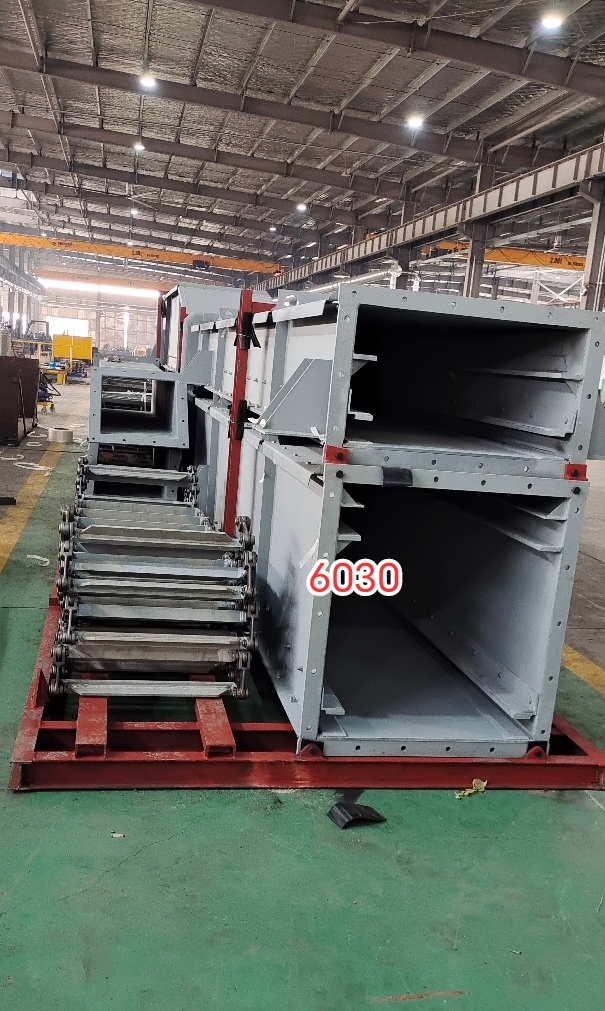
1.BG series scraper conveyor is composed of head part, middle trough body, tail part, scraper conveyor chain, driving device and installation bolster beam.
2.Fully enclosed casing, no material leakage when the equipment is running; the conveying chain is made of high-quality alloy die forgings after heat treatment, which is strong and wear-resistant; the inlet and outlet of the equipment and the conveying length can be flexibly designed and arranged according to the process requirements.
3.The material enters the bottom of the tank evenly through the feeding port of the equipment, and is continuously and evenly transported from the feeding port to the discharge port by the load-bearing scraper conveyor chain that runs continuously from the tail to the machine head. It can realize multi-point feeding and multi-point unloading.
4.The tail of the machine is equipped with a screw adjustment device to adjust the tightness of the conveyor chain to ensure that it is always in a moderately tensioned state during operation, so that the equipment is in a stable operating state.
5.BG series scraper conveyors are suitable for conveying powdery and small granular dry materials with small abrasiveness and small accumulation specific gravity, such as steelmaking dust and dust from bag filter.
6.The BG series scraper conveyor produced by our company can be selected when conveying powdery, small particle and small block dry materials with high abrasiveness and high bulk density.
Application
1.BG series scraper conveyors are suitable for conveying powdery and small granular dry materials with small abrasiveness and small accumulation specific gravity, such as steelmaking dust and dust from bag filter.
2.BG series scraper conveyors are currently widely used in widely used in steel, metallurgy, waste incineration ,electric power, chemical industry, mining, building materials and other industries. Fly ash conveying of dust removal and ash conveying system.
Technical Parameter
|
Model |
BG250 |
|
Chute Width (mm) |
250 |
|
Chute Depth(mm) |
400 |
|
Capacity (m3/h) |
5m3/h 10m3/h |
|
Scraper size(mm) |
L150 * W220 * H40 |
|
Chain Pitch(mm) |
(P1/P2) P=142mm/200mm |
|
Chain Speed (m/s) |
0.065 0.1 |
|
Transport material thickness (mm) |
100 |
|
Conveyor Length (m) |
≤25 |
|
Installation Angle (degree) |
≤15° |
|
Motor Power Kw |
4 |
|
Drive Installation Type |
Back Mounted (Left/Right) |
|
Transmission Type |
Chain Drive |
|
Ideal Granularity (mm) |
<5 |
|
Maximum Humidity (%) |
≤5% |
|
Maximum Temperature(˚C) |
≤150˚C |
| Capacity (m3/h) | Conveyor Length (m) | Chain Speed (m/s) | Motor Power Kw |
|
5 |
4.82< L ≤25 |
0.065 |
4 |
|
10 |
4.82< L≤25 |
0.1 |
4 |
The really abundant projects management experiences and 1 to just one provider model make the high importance of business enterprise communication and our easy understanding of your expectations for Drag Chain Scraper Conveyor Collecting Conveyor, We generally keep on with the principle of “Integrity, Efficiency, Innovation and Win-Win business”. Welcome to visit our website and do not hesitate to communicate with us. Are you completely ready? ? ? Let us go!!!
Wholesale Price China Conveyor and Drag Conveyor, As the world economic integration bringing challenges and opportunities to the xxx industry, our company , by carrying on our teamwork, quality first, innovation and mutual benefit, are confident enough to offer our clients sincerely with qualified products, competitive price and great service, and to build a brighter future under the spirit of higher, faster, stronger with our friends together by carrying on our discipline.
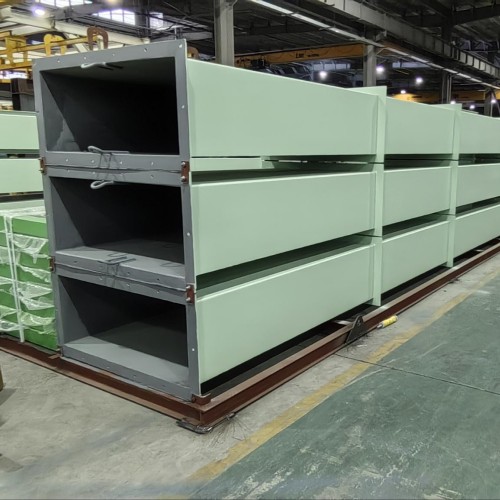
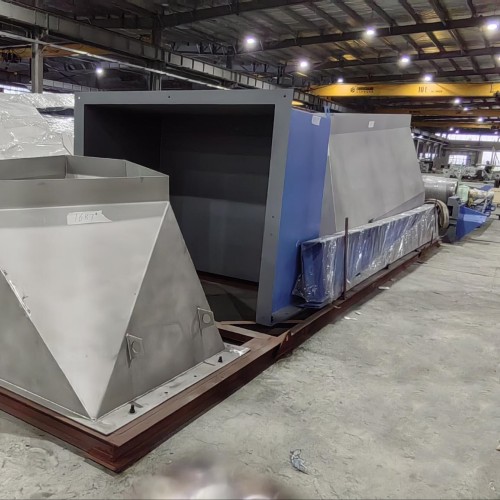
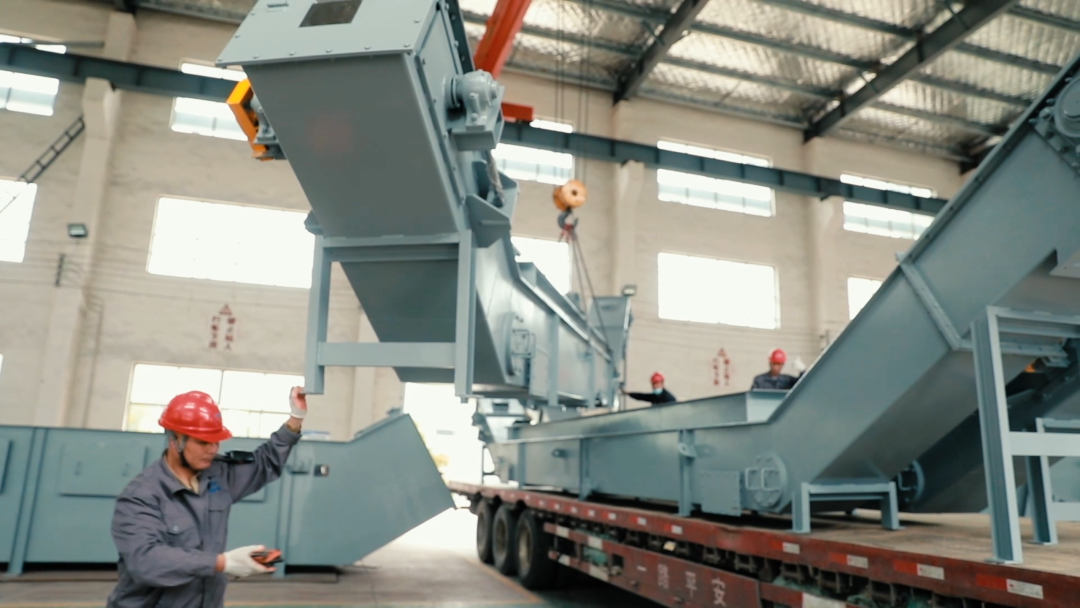
|
Model |
BG500S |
|
Chute Width (mm) |
500 |
|
Chute Depth(mm) |
500 |
|
Capacity (m3/h) |
30m3/h |
|
Chain Speed (m/s) |
0.12 |
|
Chain Pitch(mm) |
(P1/P2) P=142mm/200mm |
|
Conveyor Length (m) |
5.9<L≤40 |
|
Scraper size(mm) |
142×470×50mm |
|
Transport Material Thickness (mm) |
150mm |
|
Installation Angle (degree) |
≤15° |
|
Motor Power Kw |
7.5 |
|
Drive Installation Type |
Back Mounted (Left/Right) |
|
Transmission Type |
Chain Drive |
|
Ideal Granularity (mm) |
<10 |
|
Maximum Humidity (%) |
≤5% |
|
Maximum Temperature(˚C) |
≤150˚C |
|
Model |
BG640S |
|
Chute Width (mm) |
640 |
|
Chute Depth(mm) |
500 |
|
Capacity (m3/h) |
50m3/h |
|
Chain Speed (m/s) |
0.12 |
|
Chain Pitch(mm) |
(P1/P2) P=142mm/200mm |
|
Conveyor Length (m) |
3.39<L≤30 30≤x≤40 |
|
Scraper size(mm) |
142×600×50mm |
|
Transport Material Thickness (mm) |
200mm |
|
Installation Angle (degree) |
≤15° |
|
Motor Power Kw |
7.5 |
|
Drive Installation Type |
Back Mounted (Left/Right) |
|
Transmission Type |
Chain Drive |
|
Ideal Granularity (mm) |
<10 |
|
Maximum Humidity (%) |
≤5% |
|
Maximum Temperature(˚C) |
≤150˚C |
SELECTION & TECHNICAL QUESTIONS
Q1: How do I select the right conveyor model? What information should I provide?
> To recommend the most suitable solution, please provide the following details:
> 1. Material type: What material are you conveying? (e.g., fly ash, wood chips, biomass pellets, bottom ash, etc.)
> 2. Material properties: Particle size, temperature, moisture content, abrasiveness
> 3. Capacity requirement: How many tons per hour (t/h) do you need?
> 4. Installation conditions: Conveying distance, incline angle, space limitations
> 5. Application industry: Which industry is this for? (e.g., waste-to-energy plant, biomass power plant, cement plant)
> You can also email us or contact us via WhatsApp. Our engineers will get back to you within 24 hours.
Q2: What is the difference between screw conveyors and chain conveyors? Which one should I choose?
> Both types have different applications:
> – Screw Conveyors: Best for powdery and small-grain materials (e.g., fly ash, cement powder). Good sealing performance, simple structure, low maintenance cost.
> – Chain Scraper Conveyors: Best for bulky, highly abrasive materials (e.g., bottom ash, municipal solid waste, biomass fragments). Supports multiple inlet and outlet points.
> – Bucket Elevators: Ideal for vertical or steep-incline material lifting.
> If you are not sure, tell us your material and working conditions, and our engineers will help you choose.
Q3: Can your equipment handle high-temperature materials? What is the maximum temperature?
> We can customize equipment according to material temperature:
> – Standard type: 0~80°C, carbon steel
> – Medium temperature type: 80~200°C, thickened wear-resistant liner
> – High temperature type: 200~400°C, special heat-resistant steel, optional cooling jacket
> Please tell us your material temperature, and we will recommend the most suitable material solution.
Q4: Are there any limits on conveying distance and lifting height?
> Standard design range:
> – Screw conveyor: Single section up to 70 meters; multiple sections can be connected for longer distances
> – Chain conveyor: Single machine up to 60 meters
> – Bucket elevator: Lifting height up to 50 meters
> We can also customize for extra-long distances or special angles. Contact us for detailed solutions.
Q5: Do you provide explosion-proof design?
> Yes. For explosive and flammable conditions such as pulverized coal and biomass dust, we offer:
> – Explosion-proof motors (Ex d IIB T4 standard)
> – Reserved openings for explosion vents / rupture discs
> – Fully sealed structure to prevent dust leakage
> Please specify your explosion-proof rating requirements.
CUSTOMIZATION & MANUFACTURING
Q6: Do you support customization? What is the lead time?
> Over 90% of our equipment is customized according to customer working conditions. Standard models take about 90–120days. Special customizations take 120–180 days, depending on configuration complexity.
Q7: What material options do you offer?
> Common materials include:
> – Carbon steel (Q235B): Standard working conditions
> – Wear-resistant steel (NM400/NM500): Highly abrasive materials
> – Stainless steel 304/316L: Food, chemical, corrosion-resistant requirements
> – Bi-metal wear-resistant composite plate: Extreme abrasion conditions
> We will recommend the most cost-effective material solution based on your material properties.
Q8: What certifications do you have?
> We hold the following certifications:
> – ISO 9001:2015 Quality Management System
> – ISO 14001 Environmental Management System
> – ISO 45001 Occupational Health & Safety Management
> – CE Certification (EN 1090 Steel Structure)
> If you need scanned copies of specific certificates, please contact us.
DELIVERY & LOGISTICS
Q9: Which countries do you export to? Do you have export experience?
> Our equipment has been exported to more than 20 countries worldwide, including:
> – Europe: Germany, France, Poland, Turkey, etc.
> – Southeast Asia: Singapore, Thailand, Indonesia, Vietnam, etc.
> – Middle East: Saudi Arabia, UAE, etc.
> – South America**: Brazil, Chile, etc.
> We are familiar with the full export process: packaging, customs declaration, and ocean freight. We can provide FOB, CIF, and other trade terms.
Q10: What is your packaging method? Is it suitable for long-distance ocean shipping?
> Export-standard packaging:
> – Large items / complete machines**: Rust prevention + waterproof film + fumigated solid wood pallet
> – Precision components: Wooden case with shock-absorbing filling
> – Random accessories: Categorized packing with detailed packing list
> All wooden packaging meets IPPC fumigation standards for direct customs clearance.
Q11: What is your minimum order quantity?
> We do not have a strict minimum order quantity. Single-unit orders are welcome. Bulk orders can enjoy more favorable pricing.
INSTALLATION & AFTER-SALES
Q12: Do you provide installation guidance? Do engineers need to come to site?
> We offer two service options:
> 1. Remote guidance: Detailed installation drawings and operation manuals, video guidance for installation (free of charge)
> 2. On-site service: Dispatch engineers to site for installation and commissioning (travel costs are additional)
> Most customers choose remote guidance. Our equipment is designed as a modular structure for easy installation.
Q13: What is the warranty period? What are the wearing parts?
> Standard warranty period is 12 months (from the date of arrival at port).
> Wearing parts list:
> – Chain / screw flights: Approximately 1–3 years, depending on material abrasiveness
> – Liners: Approximately 2–4 years
> – Bearings: Approximately 2–3 years
> We recommend ordering a wearing-parts spare kit together with your first order.
Q14: How do you solve problems during operation?
> We provide 7×24 technical support:>
> – Response within 24 hours for technical issues
> – Remote video troubleshooting guidance
> – Engineer on-site service when necessary
> – Common spare parts in stock for fast delivery
QUOTATION & COOPERATION
**Q15: How can I get a quote? How long does it take?
> Quotation process:
> 1. You provide material parameters, capacity, installation conditions, and other requirements
> 2. Our engineers evaluate and select the appropriate model
> 3. Formal quotation and technical proposal provided within 7 working days
> You can contact us via email, or the online inquiry form.
Q16: What are your payment terms?
> Standard payment terms:
> – 30% advance payment: After contract signing, to start production
> – 70% balance: Before shipment, or against copy of Bill of Lading
For long-term cooperative customers, more flexible payment terms can be negotiated.
Follow these 3 steps to find your ideal conveyor solution
Step 1: Identify Your Material Type
Different materials require different conveyor designs. Tell us what you are conveying:
| Material Category | Examples | Recommended Conveyor Type |
| Powder / Fine Granules | Fly ash, cement powder, lime powder | Screw Conveyor |
| Small Granules / Pellets | Biomass pellets, plastic granules, grain | Screw Conveyor / Belt Conveyor |
| Fragments / Chips | Wood chips, bark, agricultural residues | Chain Scraper Conveyor |
| Bulky / Abrasive | Bottom ash, slag, MSW, clinker | Chain En-Masse Conveyor |
| Vertical Lift | Any bulk material needs vertical transport | Bucket Elevator |
Step 2: Define Your Working Conditions
Please prepare the following parameters before contacting us:
| Parameter | Why It Matters | Example |
| Capacity (t/h) | Determines conveyor size and power | 10 t/h, 50 t/h, 100 t/h |
| Conveying Distance (m) | Determines machine length | 15m horizontal, 30m incline |
| Incline Angle (°) | Affects capacity and design | 0° horizontal, 30° incline |
| Material Temperature (°C) | Determines material grade | Ambient, 150°C, 300°C |
| Moisture Content (%) | Affects discharge design | Dry, damp, wet (needs dewatering) |
| Abrasiveness | Determines liner thickness | Low, medium, high |
| Application Industry | Determines certification needs | Power plant, cement, mining, recycling |
Step 3: Choose Configuration Options
Based on your answers above, our engineers will recommend:
Material grade — carbon steel / wear-resistant steel / stainless steel
Sealing type — open trough / fully enclosed / gas-tight
Drive system — motor power, gearbox brand, speed range
Auxiliary options — explosion-proof motor, cooling jacket, cleaning device, level sensors
Not Sure Where to Start?
Send us your basic requirements, and our engineers will design a customized solution for you — completely free.
Email: bootec@bootecgroup.com Response time: Within 24 hours
[REQUEST A FREE QUOTATION →]