

Chain Conveyors
-
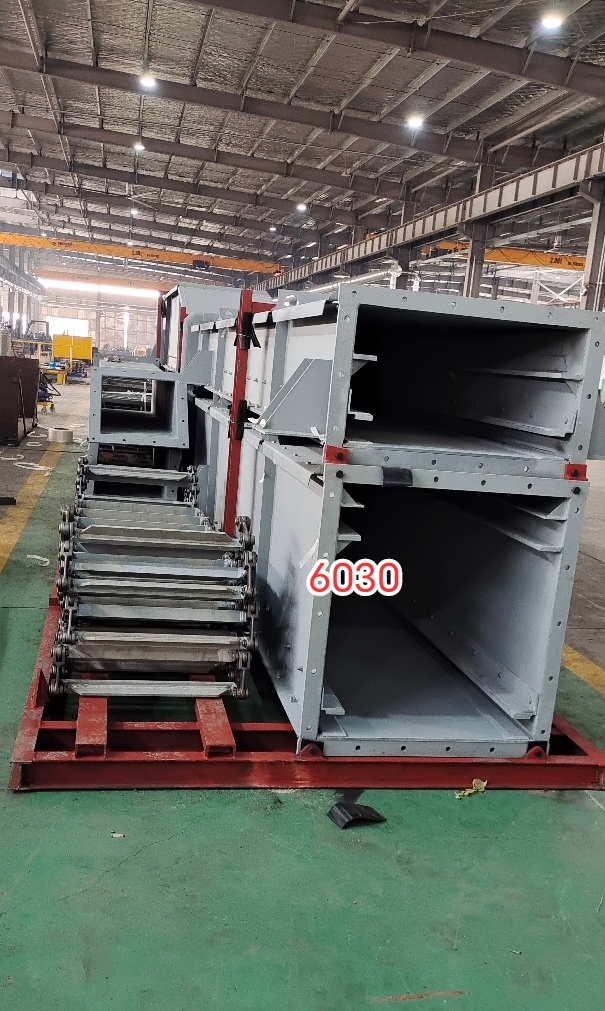
bottom ash handling for Municipal Solid Waste Treatment Plants
Bottom Ash Conveyors For Integrated Waste Management Facility (IWMF)
Conveying system for Incinerator bottom ash from municipal solid waste incineration in EfW plants is specifically engineered to handle the unique characteristics of soda ash, particularly its tendency to clump and adhere.
-

Bottom Ash handling system from coal-fired boilers
Biomass power plants rely on efficient conveying systems to transport biomass materials for combustion and power generation. Common types of conveying systems include belt conveyors, screw conveyors, chain conveyors, and pneumatic conveyors, each suited for different biomass types, distances, and plant layouts. The choice of system depends on factors like material type, distance, capacity, and space constraints. Process The high-temperature ash discharged from the furnace is firstly broken i... -

Bottom Ash handling system from coal-fired boilers
Biomass power plants rely on efficient conveying systems to transport biomass materials for combustion and power generation. Common types of conveying systems include belt conveyors, screw conveyors, chain conveyors, and pneumatic conveyors, each suited for different biomass types, distances, and plant layouts. The choice of system depends on factors like material type, distance, capacity, and space constraints. Process The high-temperature ash discharged from the furnace is firstly broken i... -

customer-centric plant manufacturer Bucket Elevators Efficient vertical conveying
A lime handling system is designed to safely store, convey, and process lime (both hydrated lime and quicklime) for various industrial applications. Lime is widely used in industries such as water treatment, flue gas desulfurization (FGD), chemical manufacturing, and construction materials production. Proper handling systems ensure lime is efficiently delivered to the required process while minimizing material waste, dust emissions, and operational downtime.
-
Conveyors for Waste Handling and Recycling
A lime handling system is designed to safely store, convey, and process lime (both hydrated lime and quicklime) for various industrial applications. Lime is widely used in industries such as water treatment, flue gas desulfurization (FGD), chemical manufacturing, and construction materials production. Proper handling systems ensure lime is efficiently delivered to the required process while minimizing material waste, dust emissions, and operational downtime.
-

Supply of Bucket Elevator for E Waste Recycling Plant
A lime handling system is designed to safely store, convey, and process lime (both hydrated lime and quicklime) for various industrial applications. Lime is widely used in industries such as water treatment, flue gas desulfurization (FGD), chemical manufacturing, and construction materials production. Proper handling systems ensure lime is efficiently delivered to the required process while minimizing material waste, dust emissions, and operational downtime.
-
Residue transport Bucket elevator
A lime handling system is designed to safely store, convey, and process lime (both hydrated lime and quicklime) for various industrial applications. Lime is widely used in industries such as water treatment, flue gas desulfurization (FGD), chemical manufacturing, and construction materials production. Proper handling systems ensure lime is efficiently delivered to the required process while minimizing material waste, dust emissions, and operational downtime.
-
Residue transport Chain conveyors
Biomass power plants rely on efficient conveying systems to transport biomass materials for combustion and power generation. Common types of conveying systems include belt conveyors, screw conveyors, chain conveyors, and pneumatic conveyors, each suited for different biomass types, distances, and plant layouts. The choice of system depends on factors like material type, distance, capacity, and space constraints. Process The high-temperature ash discharged from the furnace is firstly broken i... -
Boiler ash chain conveyor
Biomass power plants rely on efficient conveying systems to transport biomass materials for combustion and power generation. Common types of conveying systems include belt conveyors, screw conveyors, chain conveyors, and pneumatic conveyors, each suited for different biomass types, distances, and plant layouts. The choice of system depends on factors like material type, distance, capacity, and space constraints. Process The high-temperature ash discharged from the furnace is firstly broken i... -
Ash extractor
Biomass power plants rely on efficient conveying systems to transport biomass materials for combustion and power generation. Common types of conveying systems include belt conveyors, screw conveyors, chain conveyors, and pneumatic conveyors, each suited for different biomass types, distances, and plant layouts. The choice of system depends on factors like material type, distance, capacity, and space constraints. Process The high-temperature ash discharged from the furnace is firstly broken i... -
Sifting ash conveyors
Biomass power plants rely on efficient conveying systems to transport biomass materials for combustion and power generation. Common types of conveying systems include belt conveyors, screw conveyors, chain conveyors, and pneumatic conveyors, each suited for different biomass types, distances, and plant layouts. The choice of system depends on factors like material type, distance, capacity, and space constraints. Process The high-temperature ash discharged from the furnace is firstly broken i... -
BOTTOM ASH EXTRACTOR
Biomass power plants rely on efficient conveying systems to transport biomass materials for combustion and power generation. Common types of conveying systems include belt conveyors, screw conveyors, chain conveyors, and pneumatic conveyors, each suited for different biomass types, distances, and plant layouts. The choice of system depends on factors like material type, distance, capacity, and space constraints. Process The high-temperature ash discharged from the furnace is firstly broken i...