

Products
-

Ash Handling Systems for Biomass to Energy Boilers
Biomass-to-energy boilers generate significant quantities of ash during the combustion of renewable fuels such as wood chips, sawdust, agricultural residues, and pellets. Efficient ash handling systems are critical to ensuring the smooth operation, environmental compliance, and safety of these facilities. These systems are tailored to manage both bottom ash and fly ash generated during the biomass combustion process.
-

Ash Handling Systems for Biomass to Energy Boilers
Biomass-to-energy boilers generate significant quantities of ash during the combustion of renewable fuels such as wood chips, sawdust, agricultural residues, and pellets. Efficient ash handling systems are critical to ensuring the smooth operation, environmental compliance, and safety of these facilities. These systems are tailored to manage both bottom ash and fly ash generated during the biomass combustion process.
-
Fly Ash Conveyors and Bottom Ash Conveyors
Fly ash and bottom ash conveyors are critical components of ash handling systems, ensuring the efficient transport of ash generated during combustion processes in power plants, waste-to-energy facilities, and biomass plants. These conveyors help manage ash safely, effectively, and in an environmentally compliant manner.
-
Ash Conveyor System
An Ash Conveyor System is an essential component in power plants, waste-to-energy facilities, cement plants, and other industries that require the efficient collection, handling, and disposal of ash generated during combustion processes. These systems are designed to transport ash, whether it’s fly ash, bottom ash, or boiler slag, in a reliable, efficient, and environmentally friendly manner.
Ash conveyor systems can include mechanical conveyors, pneumatic conveyors, or a combination of both, depending on the specific application and the type of ash being handled.
-
Ash Handling & Pneumatic Conveying
Ash Handling & Pneumatic Conveying systems are widely used in power plants, waste-to-energy plants, and other industries where the efficient transportation of ash is required. Pneumatic conveying offers a highly versatile and efficient way of moving ash (both fly ash and bottom ash) over long distances, either horizontally or vertically, through a pipeline using air or gas as the conveying medium.
-
Trough screw conveyors for ash
Trough screw conveyors are a commonly used material handling solution for ash in industries like waste-to-energy plants and power generation. They are highly effective for transporting ash—whether fly ash, bottom ash, or slag—due to their simple, reliable design and ability to handle both dry and semi-dry materials.
-
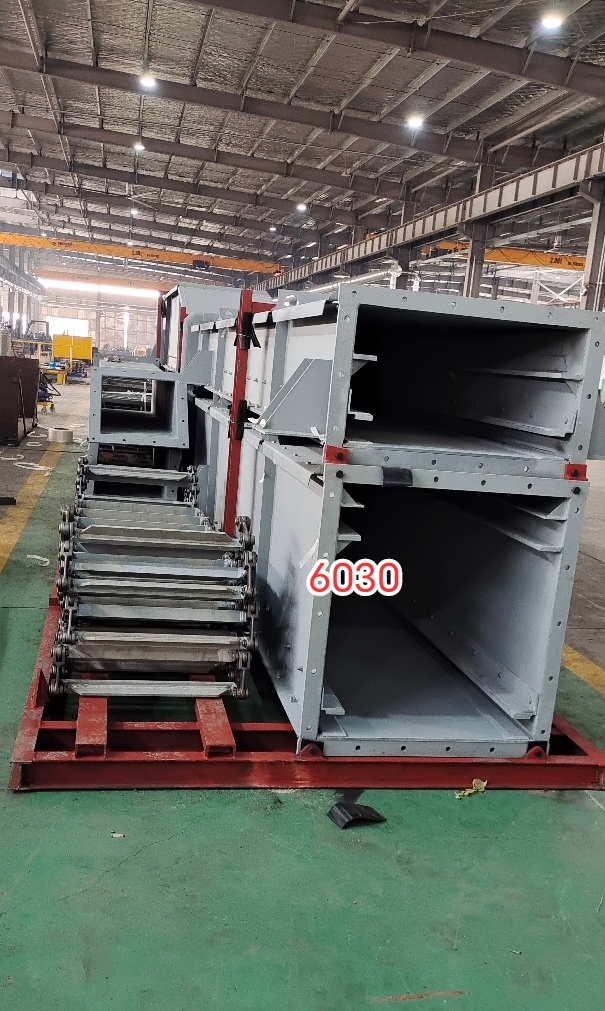
En Masse Chain Conveyor Applied to Cement in Building Materials Industry
An En Masse Chain Conveyor is a type of bulk material handling system that uses a continuous chain with attached flights to transport materials efficiently within an enclosed trough. In the cement and building materials industry, these conveyors are ideal for moving powdery, granular, and coarse materials such as cement, limestone, clinker, gypsum, and other raw materials or finished products.
The En Masse Chain Conveyor is known for its ability to transport large volumes of material over long distances, both horizontally and at an incline, making it a valuable solution for cement plants, concrete manufacturing plants, and other building material operations.
-
Trough/Drag Chain Conveyor
A Trough/Drag Chain Conveyor is a type of material handling system that uses a continuous chain to drag bulk materials through a trough or channel. These conveyors are designed to transport heavy, abrasive, and coarse materials in a variety of industrial applications such as power plants, mining, cement manufacturing, and waste-to-energy facilities. Their robust design and ability to handle a wide range of materials make them a popular choice in environments where efficiency and reliability are critical.
-
Heavy Duty Drag Chain Conveyor
A Heavy Duty Drag Chain Conveyor is an industrial material handling system designed to move heavy, abrasive, and high-temperature materials such as bottom ash, fly ash, slag, cement, and scrap materials. These conveyors are typically used in demanding environments, like power plants, waste-to-energy plants, cement factories, and mining operations. The key features of these conveyors are their strength, capacity, and durability, making them ideal for handling large volumes of harsh materials with minimal maintenance.
-
Heavy Duty Drag Chain Conveyor
A Heavy Duty Drag Chain Conveyor is an industrial material handling system designed to move heavy, abrasive, and high-temperature materials such as bottom ash, fly ash, slag, cement, and scrap materials. These conveyors are typically used in demanding environments, like power plants, waste-to-energy plants, cement factories, and mining operations. The key features of these conveyors are their strength, capacity, and durability, making them ideal for handling large volumes of harsh materials with minimal maintenance.
-
Model H En-Masse Commercial Drag Chain Conveyors
Model H En-Masse Commercial Drag Chain Conveyors are advanced material handling systems designed to convey bulk materials like bottom ash, fly ash, slag, and other coarse or fine materials in power plants, cement industries, or waste-to-energy plants. These systems are used in a variety of industries for efficient, continuous, and reliable transport of materials, particularly those that are abrasive, hot, and bulky.
-
China Design En Masse Conveyor Drag Scraper Chain Conveyor Forging Chain Type Buried Scraper Conveyor
In power plants, particularly those handling bottom ash and fly ash, conveyors are vital for the efficient transport of waste materials like bottom ash, slag, and fly ash. Several types of ash handling conveyors are used, including En-Masse Conveyors, Drag Scraper Chain Conveyors, and Buried Scraper Conveyors. These systems can be specifically designed for high-capacity, reliable operations, especially in industrial applications like waste-to-energy plants and coal-fired power plants.